Loading...
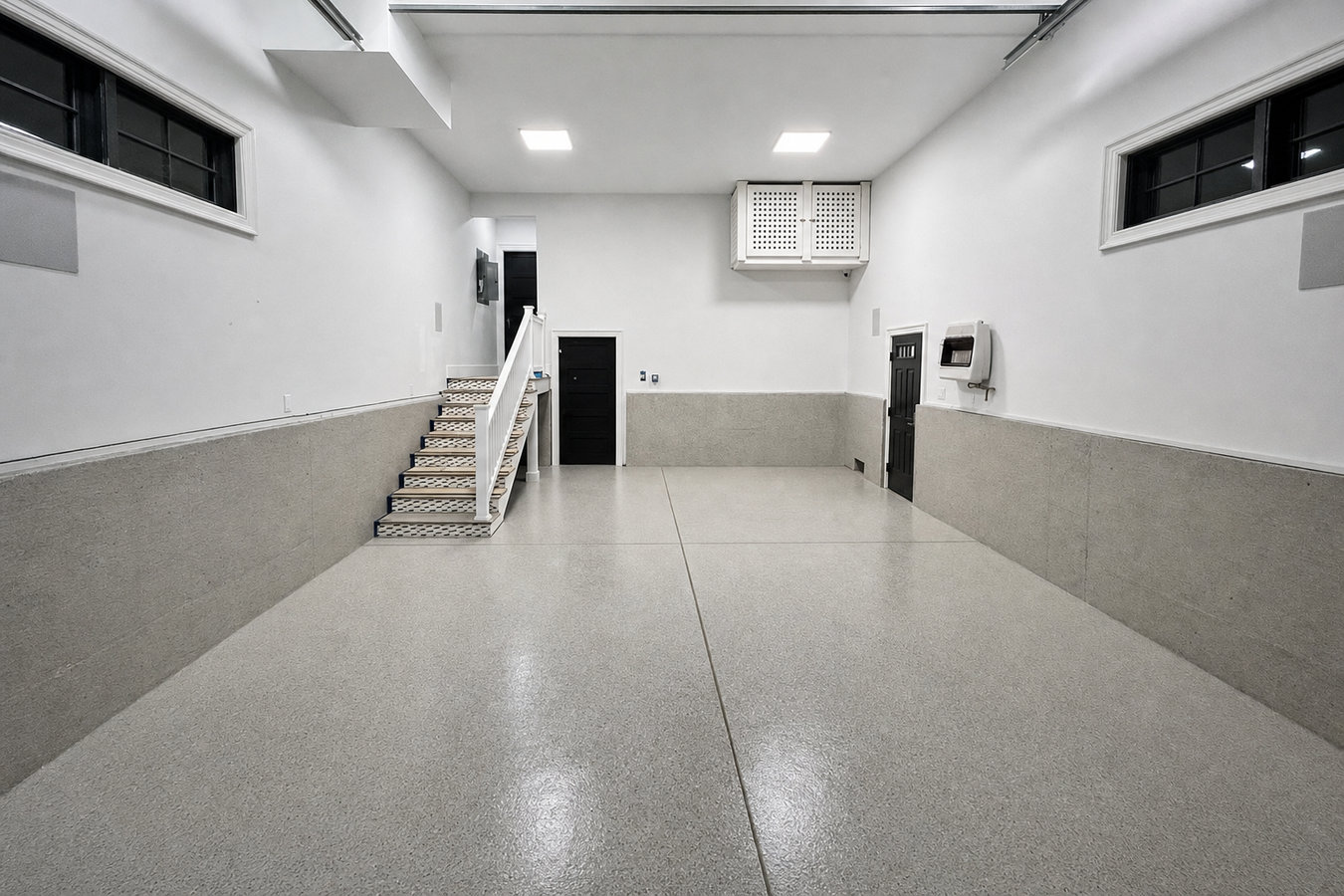
South Florida's water table sits just feet below the surface. We install below-grade floor systems designed for that reality - so your coating doesn't peel the first time a wet summer rolls through.
Basement and below-grade flooring in Coral Gables covers epoxy coatings, polished concrete, and other moisture-resistant systems applied over existing slabs in utility rooms, sunken garage floors, and partially below-grade bonus spaces. Most standard coating jobs finish in one to two days, with a curing period before the space is usable again.
Most Coral Gables homes don't have traditional basements - South Florida's high water table makes deep foundations impractical. What many homeowners do have are below-grade or at-grade utility spaces that need the same moisture-resistant treatment a basement would. The key difference from above-grade flooring is that any slab at or near ground level is under constant upward pressure from groundwater, which means the product and preparation matter far more than they do on a second floor.
Before applying any coating, we pair the installation with proper concrete grinding and surface preparation - the step that determines whether the finish bonds and lasts or peels within a season.
A chalky white film appearing on your concrete - especially after it rains - is a sign moisture is moving up through the slab and leaving mineral deposits behind. In Coral Gables, where the water table is high and rain is frequent, this is a common early warning. Left alone, it will cause any coating you put down to bubble and peel.
A persistent damp or musty odor, even when the room looks dry, usually means moisture is present in or under the slab. South Florida's humidity means mold can establish itself quickly once moisture finds a foothold. This smell is a sign something is happening that your eyes can't see yet - and it's worth addressing now.
An older epoxy or paint coating that is lifting in patches means the original installation didn't account for moisture properly - or the product wasn't suited to South Florida's conditions. Peeling coating is also an uneven surface that's harder to clean and easier to trip on. The fix is proper prep and a correctly specified replacement system.
Surface cracks and pitting are normal in older concrete, and Coral Gables has significant pre-1970s housing stock. When cracks start to widen, collect dirt, or show a height difference from one side to the other, have a professional assess before putting any new flooring over them. Covering structural issues without addressing them compounds the problem.
Every below-grade project starts with slab assessment and moisture testing - there are no shortcuts on that step in South Florida. From there, we match the finish to how you use the space. For utility rooms, laundry areas, and storage spaces, standard epoxy coatings provide a durable, easy-to-clean surface at a straightforward cost. For home gyms, hobby rooms, or garage floors you want to take pride in, decorative options like metallic epoxy or polished concrete deliver a finished look that makes the space feel like a real room.
We also handle crack repair, slab patching, and moisture-blocking primer applications as part of the installation - not as separate line items. After the floor is done, proper concrete sealing keeps the surface protected from the ongoing humidity and water intrusion that South Florida floors deal with year-round.
Suited to homeowners who want a durable, easy-to-clean surface that brightens a dark utility room without a large upfront cost.
A good fit for homeowners converting a below-grade space into a room they actually want to use and spend time in.
Chosen by homeowners who want a decorative, one-of-a-kind finish that makes the floor a feature rather than just a surface.
The right starting point when moisture testing shows vapor emission levels that would cause a standard coating to fail.
In Miami-Dade County, the water table can sit just a few feet below ground level - sometimes less after heavy rain. That means concrete slabs at or near grade are under constant upward pressure from groundwater, even when the surface looks and feels completely dry. Products that perform reliably in drier climates can bubble, yellow, or peel in South Florida's conditions. Coral Gables also has some of the oldest housing stock in Miami-Dade - many homes in neighborhoods like Coral Gables Riviera were built with concrete slabs that predate modern moisture-control standards, which means the preparation phase on older homes typically takes more time and care than on a newer build.
Homeowners in West Miami and Sweetwater face similar water table conditions and the same demand for moisture-tolerant systems. Miami-Dade County also enforces its own building standards that are stricter than the state baseline - while a basic floor coating typically doesn't require a permit, any structural slab work or drainage modifications may trigger county requirements. Knowing this upfront helps your project move forward cleanly.
We ask about the space, what's currently on the floor, and what you're hoping to use the room for. This helps us show up prepared. We respond within one business day and schedule an on-site visit shortly after.
We inspect the condition of your slab, check for cracks or previous coatings, and test for moisture vapor coming up through the concrete. You receive a written estimate covering exactly what work is needed and what it will cost - no price given without seeing the floor first.
Cracks and surface damage get filled before anything else goes down. In Coral Gables, we apply a moisture-blocking primer as a standard step - not an upsell - because the local water table makes it a practical necessity. This layer cures before the decorative coat goes on top.
The coating or polishing work happens in layers, with drying time between each one. Plan to stay out of the space for at least 24 hours after the final coat, and 72 hours or more before moving heavy items back in. We walk you through the finished floor and care instructions before we leave.
We assess the slab in person, test for moisture, and give you a written quote before any work starts.
(645) 300-7691Every slab we quote gets tested for vapor emission before we recommend a coating. In South Florida, skipping this step is one of the most common reasons floor coatings fail within a year. We build the test into the estimate visit - you don't pay extra for it.
We use systems specifically chosen for high heat and humidity. A warranty that excludes moisture-related failures is almost no warranty at all in this climate. We can tell you exactly which products we use and why they hold up here - and we'll put that in writing.
We know when a project needs a permit through Miami-Dade County Building Department and when it doesn't. We tell you upfront so your project doesn't hit a stop-work order or create complications when you sell.
Your written estimate covers slab prep, moisture treatment, materials, and labor. If something about your slab would change the number - a crack that needs structural attention, for example - we tell you during the estimate visit, not after we've started work.
Below-grade flooring in South Florida is not the same job as in a drier climate - the water table, the humidity, and the age of the local housing stock all change what a correct installation requires. We work on these floors regularly throughout Coral Gables and the surrounding area, and we know what holds up and what doesn't.
The critical first step before any coating - opening up the slab surface so the new system bonds and doesn't peel.
Learn MorePenetrating and topical sealers that protect below-grade and at-grade slabs from moisture intrusion and staining year-round.
Learn MoreSummer rains put every below-grade floor to the test. Call now or request an estimate online - we'll assess your slab and tell you exactly what it needs.