
Loading...
Old coatings peeling and nothing sticks? We grind your slab flat, test for moisture, and give the next finish a surface it can actually hold.
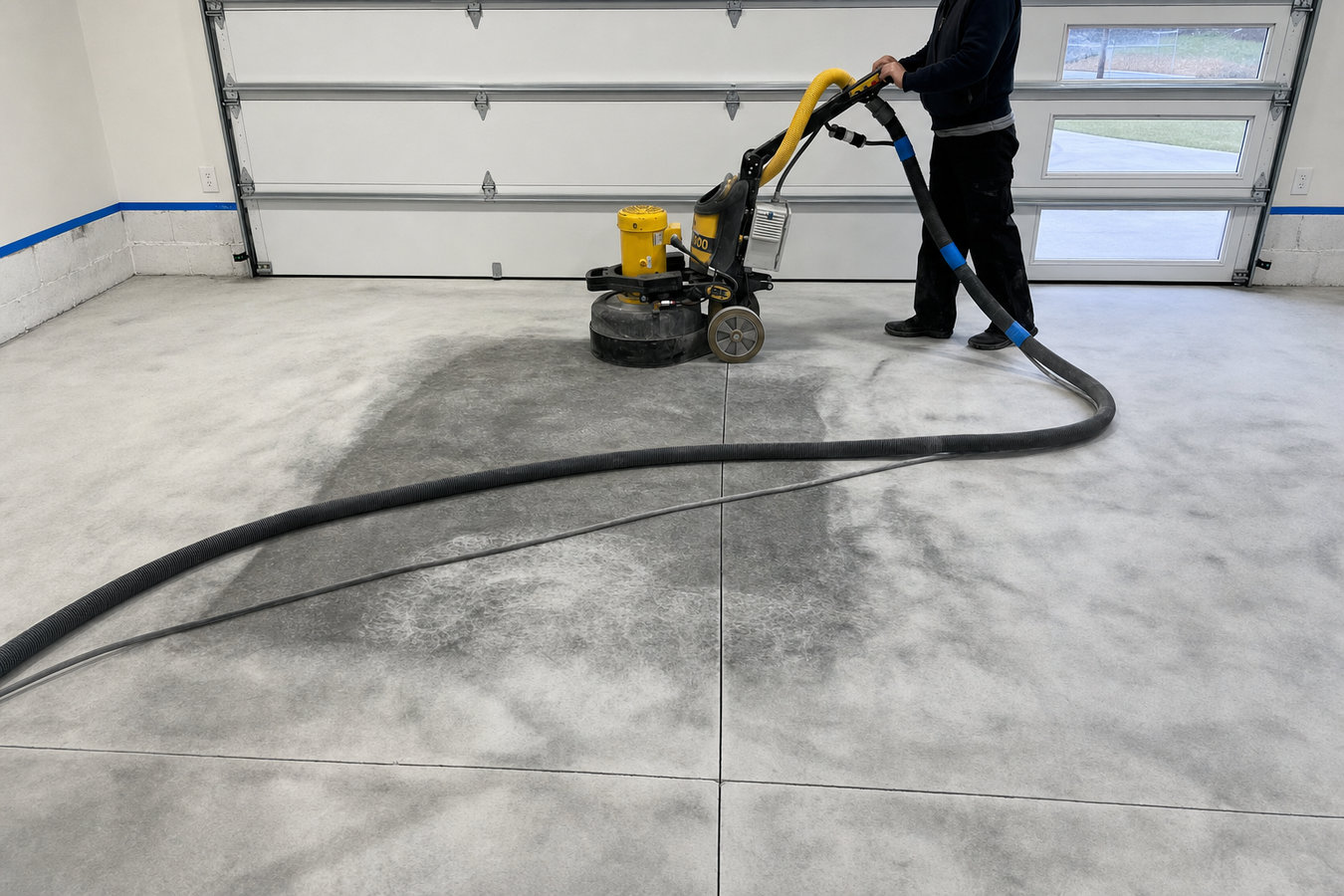
Concrete grinding in Coral Gables removes the top layer of a slab using diamond-tipped machines to eliminate old coatings, adhesives, rough patches, and high spots, and most jobs on a standard garage or interior space are completed in a single workday.
If a coating or epoxy has been peeling off your floor, the problem is almost always what happened - or did not happen - before that coating went on. Surface preparation is the step most contractors skip or rush, and it is exactly why finishes fail within a year in South Florida. Getting it right the first time means the finish you choose, whether concrete sealing or a full epoxy system, bonds to solid concrete instead of a compromised surface.
We also test slab moisture before starting. Coral Gables concrete draws humidity up from the ground year-round, and a floor that looks dry on the surface can still hold enough moisture to destroy a new coating. That test takes minutes and it protects the entire job.
If paint or a coating is flaking up in sheets or bubbling away from the slab, the original surface was not properly prepared or moisture has worked its way up through the concrete. In Coral Gables this is extremely common because the concrete never fully dries out. Grinding removes the failed coating and gives you a stable surface to start from.
That white residue is called efflorescence, and it means moisture is moving up through your slab and depositing minerals as it evaporates. It is especially common in Coral Gables homes because of the porous limestone beneath the soil. Wiping it away only delays the problem - grinding, treatment, and sealing address the root issue.
If furniture legs catch on the floor, water pools after mopping, or there are visible ridges or humps in the surface, the concrete is uneven. This can happen from settling, from previous repairs not feathered in smoothly, or simply from age. Grinding levels the surface so it is flat, safe, and ready for any finish.
If you have pulled up old tile, vinyl, or carpet and there is a layer of stubborn adhesive left behind, grinding is the most effective way to remove it. Installing new flooring over old adhesive almost always leads to an uneven surface and premature failure. This is a very common situation in Coral Gables older homes where multiple generations of flooring have been layered over the decades.
Surface preparation is not one thing - it is a sequence of steps tailored to what your specific floor needs. We start with a moisture test and a thorough walk of the slab to understand what we are dealing with. Then we use dust-shrouded diamond grinders to remove old coatings, level high spots, and open the concrete surface so the next material has something real to grip. When the job calls for it, we follow grinding with concrete sealing or prepare the floor for a full coating system.
For floors with heavy old coatings, asphalt adhesive, or significant damage, we coordinate with our concrete floor stripping and removal process before grinding begins. That ensures we are not grinding through material that should come off by another method first - which protects your timeline and keeps costs predictable.
Suited for floors where old paint, epoxy, tile adhesive, or mastic needs to come off before any new finish can go on.
Suited for slabs with high spots, ridges, or uneven areas from settling or previous patchwork that need to be brought to a uniform plane.
Suited for floors scheduled for epoxy, polyurea, or polyaspartic coatings where the concrete needs an open, profiled surface for maximum adhesion.
Suited for Coral Gables slabs with efflorescence, oil stains, or suspected high moisture vapor emission before any sealed or coated finish.
Coral Gables sits on a porous limestone base that drains quickly but also allows groundwater to move upward through concrete slabs. Combined with the city's year-round humidity - regularly above 75 percent - this means local slabs almost always carry more moisture than they appear to. Any contractor who skips moisture testing before grinding or coating work in this area is setting the job up to fail. The surface preparation step exists specifically to address this, and it is not optional here the way it might be in a drier climate.
Coral Gables also has a large share of homes built between the 1920s and 1950s, and many of those floors have had multiple generations of flooring layered over the original slab. Homeowners across South Miami and West Miami deal with the same issue. Before grinding begins on any older home in this area, we assess whether old adhesives or tiles require testing - particularly for properties built before the late 1970s - so the work is handled safely and correctly from the start.
Learn more about safe concrete surface practices at OSHA's crystalline silica resource and professional standards at the American Concrete Institute.
Call or submit our contact form and you will hear back within one business day. We ask a few basic questions - the size of the area, what is currently on the floor, and what you want the end result to look like - so we can give you an honest first impression before we even visit.
We walk the floor carefully, check for cracks and high spots, and use a moisture meter to test the slab. In Coral Gables this step is essential - a floor that looks dry can still hold enough moisture to destroy a new coating. You get a written estimate before any work is scheduled.
We use dust-shrouded grinders that capture fine concrete particles at the source, so your home stays clean. The crew makes systematic passes across the floor at the grinder settings your specific job requires - a standard garage floor is usually done in a single day.
Once grinding is complete, we vacuum and clean the surface and then walk the floor with you. If anything looks rough or uneven, we address it on the spot. We also give you clear guidance in writing on how long to stay off the floor before the next step.
Free estimate, no obligation. We test your slab and give you honest answers about what it needs.
(645) 300-7691We test slab moisture before starting every project in Coral Gables. South Florida slabs push moisture upward year-round, and skipping this step is the number-one reason coatings fail. Testing takes minutes and it protects the finish you are about to invest in.
Our grinders run with vacuum shrouds that capture concrete dust at the source. One of the most common complaints homeowners share after concrete work is the dust that gets into everything. We keep it contained so you are not cleaning for days after we leave.
Many homes in Coral Gables were built between the 1920s and 1950s, and their floors require a different approach than a modern slab. We assess older floors carefully before grinding begins, including flagging situations where asbestos testing may be warranted before any material is disturbed.
We give you a written estimate after seeing the floor in person, and we stick to it. The condition of the floor drives the cost, and we explain exactly what we find and what the job requires before you commit to anything.
Surface preparation is foundational - get it wrong and nothing applied on top will last. We treat it as the most important part of the job because it is.
Protect your freshly prepared or finished slab with a sealer rated for South Florida's UV intensity and heavy rainfall.
Learn MoreRemove old coatings, adhesives, and failed finishes completely before grinding brings the slab back to a clean starting point.
Learn MoreCoral Gables concrete needs the right prep work to hold any finish long-term. Call today or request a free estimate and we will come assess your slab at no charge.